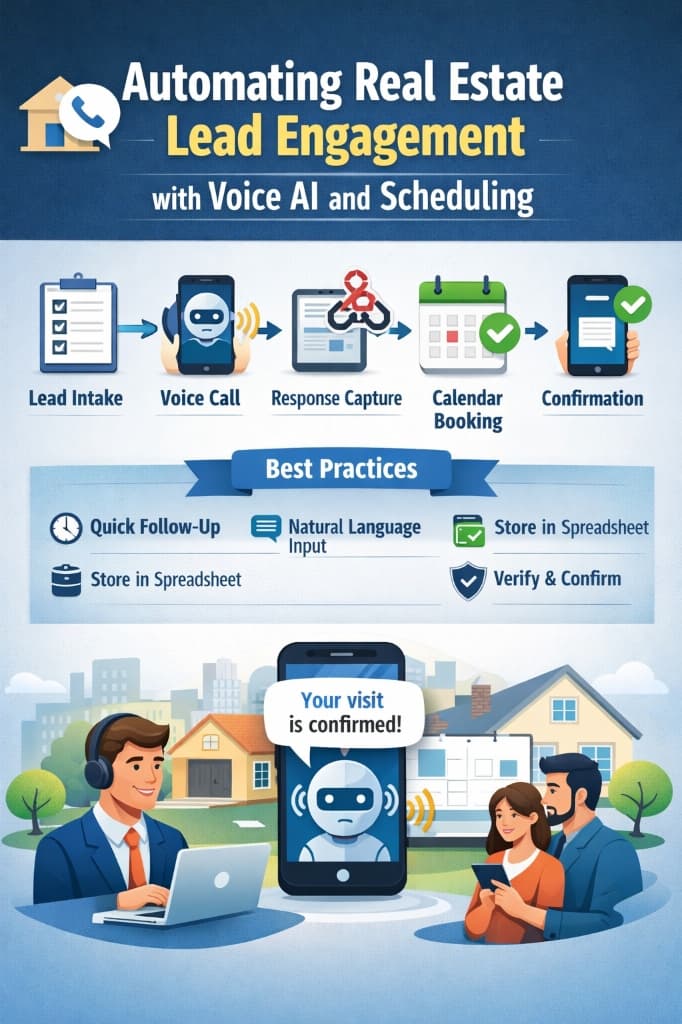
Automation is transforming how real estate teams engage with prospects. In this guide, we’ll walk through the journey of building an automated lead engagement and appointment booking flow — from capturing leads to confirming visits — using workflow automation and voice AI.
Understanding Lead Engagement Automation
Lead engagement automation refers to systems that can interact with prospects, collect intent, and take follow-up actions without manual effort. These systems bring together multiple capabilities such as:
- Voice-based conversational AI
- Workflow automation
- Spreadsheet-based data management
- Calendar scheduling
- Webhook-based communication
Together, these components enable real-time responses and faster conversions.
Planning the Automation Flow
Before implementing the workflow, it’s important to clearly define a few key elements:
- The Objective: Automatically contact new lea ds and schedule property visits
- User Interaction: Phone calls powered by a voice agent that asks simple questions
- Data Sources: Lead data and property details stored in spreadsheets
- Success Criteria: Calls completed, responses captured, and appointments booked
Clear planning ensures the automation stays focused and effective.
Development Phases
Phase 1: Lead Intake
The flow begins when a new lead is added to a spreadsheet. Each lead includes essential details such as name, phone number, and contact status. The system prepares this data so it’s ready for follow-up actions.
Phase 2: Voice-Based Outreach
Once a new or uncontacted lead is detected, an automated voice call is placed. During the call, the voice agent:
- Introduces the property
- Confirms interest
- Collects preferred visit date and time
This allows immediate engagement without human intervention.
Phase 3: Capturing User Responses
After the call, the voice agent sends the collected details back to the system through a webhook. The automation extracts:
- Prospect name
- Phone number
- Email address
- Requested appointment time
These responses are acknowledged instantly to ensure a smooth flow.
Phase 4: Data Storage & Time Interpretation
All captured responses are stored in a spreadsheet for easy tracking. Natural language inputs like “today evening” or “tomorrow at 5” are converted into accurate date-time values in local time, including appointment duration.
Phase 5: Availability Check & Booking
Before scheduling, the system verifies calendar availability for the requested time slot.
- If available, the appointment is booked automatically
- If unavailable, the flow can respond accordingly
This prevents conflicts and ensures reliable scheduling.
Phase 6: Confirmation & Acknowledgement
Once the appointment is booked, a confirmation response is sent back to the calling system. This allows the voice agent to inform the prospect that their visit has been successfully scheduled.
Best Practices
- Automate lead follow-up as early as possible
- Handle natural language inputs gracefully
- Store responses in a human-readable format
- Always verify availability before booking
- Keep user feedback loops fast and reliable
Conclusion
Automated lead engagement dramatically reduces response time and manual effort in real estate workflows. By combining voice AI, scheduling, and data tracking, teams can focus more on closing deals rather than coordinating calls and calendars.
As automation continues to evolve, systems like this will become a standard part of modern sales and customer engagement strategies.