
Sentiment analysis that reads the politeness a language builds in
Most sentiment models are trained mostly on English, so they judge every other language by English's habits of politeness — and get two things wrong in opposite directions. A complaint in Japanese arrives wrapped in honorifics and reads as neutral. A complaint in German or Swedish arrives without the hedges English pads a grievance with, and reads as hostile. This engine scores each language against its own baseline instead: honorifics raise the bar a frustration signal has to clear, and languages with fewer softening constructions have that difference subtracted before anything is called angry.
A global retail and e-commerce operator
89%
Sentiment Accuracy
Per-locale sentiment read correctly across 25+ languages
95%
Escalation Precision
The cases that need a human are the ones routed to one
18%
Churn Reduction
Fewer non-English accounts lost to cultural misreads
The client
A global retail and e-commerce operator
- Industry
- Retail & e-commerce
- Region
- Multi-region
Challenge
A sentiment model trained on English, reading languages that are not English
A global retail enterprise had a 22% churn rate in non-English speaking markets, and its legacy sentiment tool was part of why. Frustration expressed through Japanese honorifics scored as 'neutral' — the politeness the grammar requires was being read as the customer's mood. Complaints in Danish and Swedish scored as 'aggressive', because those languages do not pad a grievance with the hedges English uses and the model had learned that a missing 'sorry to bother you' means hostility. Both errors produced the wrong reply: upset customers ignored, satisfied ones escalated.
Serving 40+ countries, that is not a tuning problem, it is a training-data problem — and it does not go away by lowering a global threshold, because the two failures pull in opposite directions. The client needed something that could tell phrasing that is blunt because the language is blunt from phrasing that is blunt because the customer is angry, per language, in real time, without burying the support team in false positives.
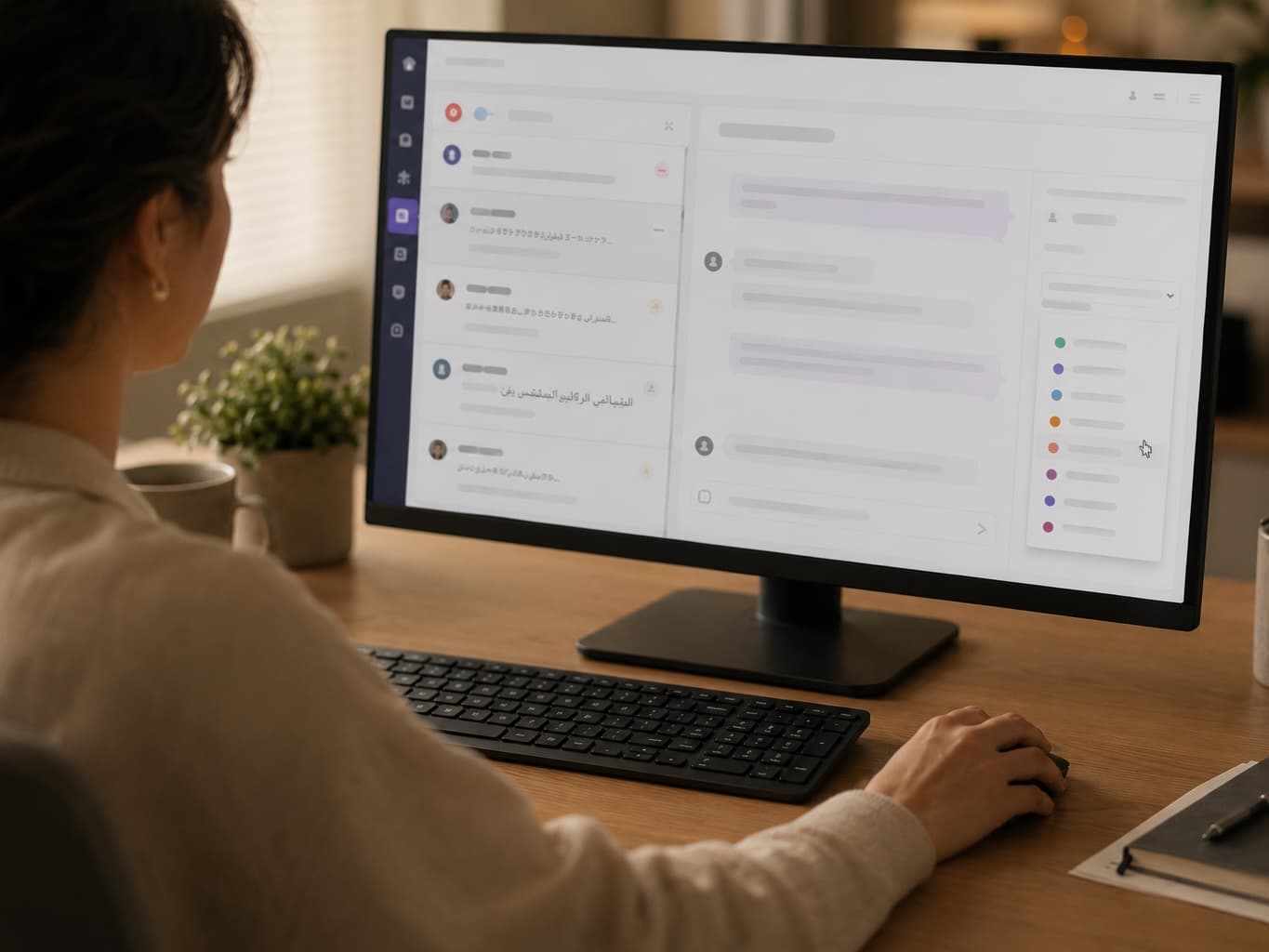
Solution
Weighting the politeness a language builds in, before scoring the sentiment
A multi-stage NLP pipeline with a language-context layer. Raw text is normalised and language-detected, then passed through a fine-tuned Transformer that maps tokens to a per-language tone matrix — replacing the binary positive/negative score with a profile that keeps politeness and intent as separate dimensions instead of collapsing them into one number.
The core of it is politeness weighting, which adjusts the score against the conventions of the language the message arrived in rather than against English. Honorifics in Japanese raise the baseline, so a frustration signal that survives them counts for more — the politeness is grammar, not mood. Languages that carry fewer softening constructions than English have that difference subtracted before anything is called hostile. It is a claim about grammar and about training data, not about the people writing the messages, and the distinction matters: build it the other way and you have encoded a stereotype into a routing rule.
Calls we would still defend
Native Multilingual LLMs — Used Gemini-class models with superior reasoning in low-resource languages, avoiding the accuracy loss of traditional translate-then-analyse workflows that strip cultural context during translation.
Regional Escalation Thresholds — Developed a configurable logic gate that applies different escalation thresholds per region — a 'latent frustration' score of 0.6 triggers handoff in Japanese markets but requires 0.8 in languages that carry less built-in hedging.
Human-in-the-Loop Retraining — Integrated a dashboard where agents correct tone misclassifications, feeding corrections back into the model daily. The gain is steepest in the first weeks, when the obvious misclassifications get caught, and flattens from there — which is the shape to expect rather than a rate to promise.
Results
The complaints it used to score as neutral
Before
Standard sentiment analysis missing 40% of subtle escalations in APAC markets. Cultural misreads causing PR incidents. 22% churn in non-English regions. Support teams flooded with false-positive escalations.
After
95% precision on the classifications that trigger an escalation. Automated replies pitched to how that market actually complains. 18% churn reduction. CSAT up 34% in markets that had been the worst performing.
89%
Sentiment Accuracy
Per-locale sentiment read correctly across 25+ languages
95%
Escalation Precision
The cases that need a human are the ones routed to one
18%
Churn Reduction
Fewer non-English accounts lost to cultural misreads
FAQ
The questions this one raises
What was actually built, the constraints it had to meet, and what we would do differently.

The model is trained on culturally annotated datasets that include localized sarcasm patterns, idioms, and communication norms. It reads the full session context rather than individual messages — so a Japanese 'thank you very much' after a complaint thread is correctly flagged as frustrated sign-off, not genuine gratitude.
Yes. The system includes a configurable Regional Escalation Matrix where you set different sensitivity thresholds per market. You can also define a 'Brand Persona' toggle to control how assertive or apologetic the AI's automated responses should be, aligned with your brand guidelines per region.
For a major language the architecture supports zero-shot learning on multilingual foundation models, so there is no training run to wait for. A niche dialect, or a market whose conventions the base model has not seen much of, takes a fine-tuning pass against your historical support data first. Which of the two you are in is the thing to establish on a call; quoting a turnaround before seeing the language mix would be guessing.
In benchmarking tests, the Tone Sentinel achieved 89% agreement with expert human annotators across all 25 languages — with 95% precision on escalation-critical classifications. Those are two different measurements and we report them separately. The human-in-the-loop feedback system keeps improving accuracy from there, steeply at first and less so once the obvious errors are gone.
The core sentiment engine processes text, but it integrates with Speech-to-Text pipelines to analyse voice transcripts in real time. Combined with our Voice AI solutions, it can detect tone shifts during live calls and trigger agent handoffs based on vocal sentiment — not just words spoken.
Keep reading
Other builds, taken apart the same way
voice-ai
Inbound voice AI that hands off to a human with the context attached
A multi-site, appointment-based service business
chatbot
A multi-modal assistant with bot defence for a fintech support chat
A financial services platform